

Skip to article
INJURED AT WORK? WE’RE HERE TO HELP.
Available 24/7
Se Habla Español
nantha logo main
Menu
  • Home
  • Practice Areas
    • Workplace Injuries
      • Burn Injuries
      • Falling Object and Scaffolding Accidents
      • Car Accidents
      • Head and Brain Injuries
      • Back and Neck Injuries
      • Machinery & Equipment Accidents
      • Occupational Illnesses
      • Repetitive Stress Injuries
      • Slip and Fall at Work
      • Spinal Cord Injuries
      • Shoulder Injuries
      • Truck Accidents
      • Third-Party Work Injury
      • Workplace Negligence
    • Workers’ Compensation
      • Construction Workers
      • Restaurant and Hospitality Workers
      • Warehouse Workers and General Laborers
      • Vocational Rehabilitation
      • Temporary and Permanent Disability
      • Disability Ratings
    • Social Security Disability (SSDI)
    • Employment Law
    • Business Law
  • Our Attorneys
  • Why Choose Us
    • Areas We Serve
      • Inland Empire
      • Los Angeles
      • Orange County
      • San Diego
  • Testimonials
  • Blog
    • Video Gallery
  • Contact Us
Close
(714) 866-0412CALL OR TEXT
Woman seated at home with a walking cane beside her chair
CALIFORNIA SOCIAL SECURITY DISABILITY ATTORNEYS

California
Social Security Disability
Attorneys

A disability can put your income and independence at risk. Our California attorneys help you understand SSI and SSDI benefits, prepare your claim, and challenge a denial.
Free Consultation(714) 866-0412
Available 24/7Get the help you need, when you need it.
No Fee Unless We WinYou pay nothing unless we recover benefits.
Se Habla EspañolHablamos español y estamos aquí para ayudarle.
FREE CONSULTATION

Need Help With
Disability Benefits?

Applying for benefits or facing a denial? We’ll review your situation, explain your SSI or SSDI options, and help you take the next step.
(714) 866-0412CALL OR TEXTRequest a Free Consultation
Available 24/7Get the help you need, when you need it.
No Fee Unless We WinYou pay nothing unless we recover benefits.
Se Habla EspañolMultilingual representation throughout California.
Practice areas

Practice Areas

Workers’ CompensationConstruction AccidentsBurn InjuriesBack and Neck InjuriesPersonal Injury
All practice areas
Third-Party Work InjuryWorkplace NegligenceClaims and BenefitsDisability RatingsTemporary and Permanent DisabilityVocational RehabilitationConstruction WorkersRestaurant and Hospitality WorkersWarehouse Workers and General LaborersWork-Related AccidentsCar AccidentsFalling Object and Scaffolding AccidentsHead and Brain InjuriesMachinery & Equipment AccidentsOccupational IllnessesRepetitive Stress InjuriesShoulder InjuriesSpinal Cord InjuriesSlip and Fall at WorkWork-Related Truck AccidentsSocial Security Disability (SSDI)Employment LawBusiness Law

Social Security Disability Attorneys in California


line goldoperating a a wheelchair

Nantha & Associates helps people throughout California understand Social Security Disability benefits. Our attorneys can review your SSI or SSDI claim, explain the eligibility rules, and help you pursue the benefits available to you.

Table of Contents show
1 Understanding SSI and SSDI
2 What is SSI?
3 Rules for getting SSI
3.1 Income
3.2 Resources (things you own)
3.3 Other rules you must meet
4 Frequently Asked Questions
5 Additional Information in California

Understanding SSI and SSDI

Social Security administers two different benefit programs. Social Security Disability Insurance (SSDI) generally depends on qualifying work credits and a disability that meets Social Security’s rules. Supplemental Security Income (SSI) is based on limited income and resources, along with age, blindness, or disability requirements. Some people qualify for both programs.

For adult disability claims, Social Security generally requires a medical condition that prevents substantial gainful work and has lasted, or is expected to last, at least 12 months or result in death. The SSI income and resource rules below do not apply to SSDI in the same way. See Social Security’s overview of both programs.

What is SSI?

SSI makes monthly payments to people who have low income and few resources and are:

  • Age 65 or older;
  • Blind; or
  • Disabled.

If you are applying for SSI, you also should ask for What You Need To Know When You Get Supplemental Security Income (SSI).

Disabled or blind children also can receive SSI. You can get more information in Benefits For Children With Disabilities.

The basic SSI amount is the same nationwide. However, many states add money to the basic benefit. You can call us to find out the amounts for your state.

Rules for getting SSI

Rules for getting SSI

Your income and resources

Whether you can get SSI depends on your income and resources (the things you own).

Income

Income is money you receive such as wages, Social Security benefits and pensions. Help with shelter costs may also affect SSI. Since September 30, 2024, food received from others is no longer counted in SSI in-kind support and maintenance calculations. The amount of income you can receive each month and still get SSI depends partly on where you live. You can call us, your personal SSI attorneys, to find out the income limits in your state.

Social Security does not count all of your income when determining whether you qualify for SSI. For example, common exclusions include:

  • The first $20 a month of most income you receive;
  • The first $65 a month you earn from working and half the amount over $65;
  • Supplemental Nutrition Assistance Program (SNAP) benefits, formerly known as food stamps;
  • Need-based shelter assistance from private nonprofit organizations; and
  • Most home energy assistance.

Social Security may count part of a spouse’s income and resources when you live together. For a child under age 18 living with a parent, some parental income and resources may count. Sponsor income and resources may also count for some noncitizens.

If you are a student, some of the wages or scholarships you receive may not count.

If you are disabled but work, Social Security does not count wages you use to pay for items or services that help you to work. For example, if you need a wheelchair, the wages you use to pay for the wheelchair do not count as income when Social Security decides whether you qualify for SSI.

Also, Social Security does not count any wages a blind person uses for work expenses. For example, if a blind person uses wages to pay for transportation to and from work, the wages used to pay the transportation cost are not counted as income.

If you are disabled or blind, some of the income you use (or save) for training or to buy things you need to work may not count.

Resources (things you own)

Resources that Social Security may count in deciding whether you qualify for SSI include real estate, bank accounts, cash, stocks and bonds.

You may be able to get SSI if your countable resources are worth no more than $2,000. A couple may be able to get SSI if they have countable resources worth no more than $3,000. If you own property that you are trying to sell, you may be able to get SSI while trying to sell it under conditional-payment rules, which can require repayment after the sale.

Related: How Disability Ratings Affect California Workers’ Compensation Benefits

Social Security does not count everything you own in deciding whether you have too many resources to qualify for SSI. For example, Social Security generally does not count:

  • The home you live in and the land it is on;
  • Life insurance policies with a combined face value of $1,500 or less;
  • One vehicle used by you or your household for transportation;
  • Burial plots for you and members of your immediate family; and
  • Up to $1,500 in burial funds for you and up to $1,500 in burial funds for your spouse.

Other rules you must meet
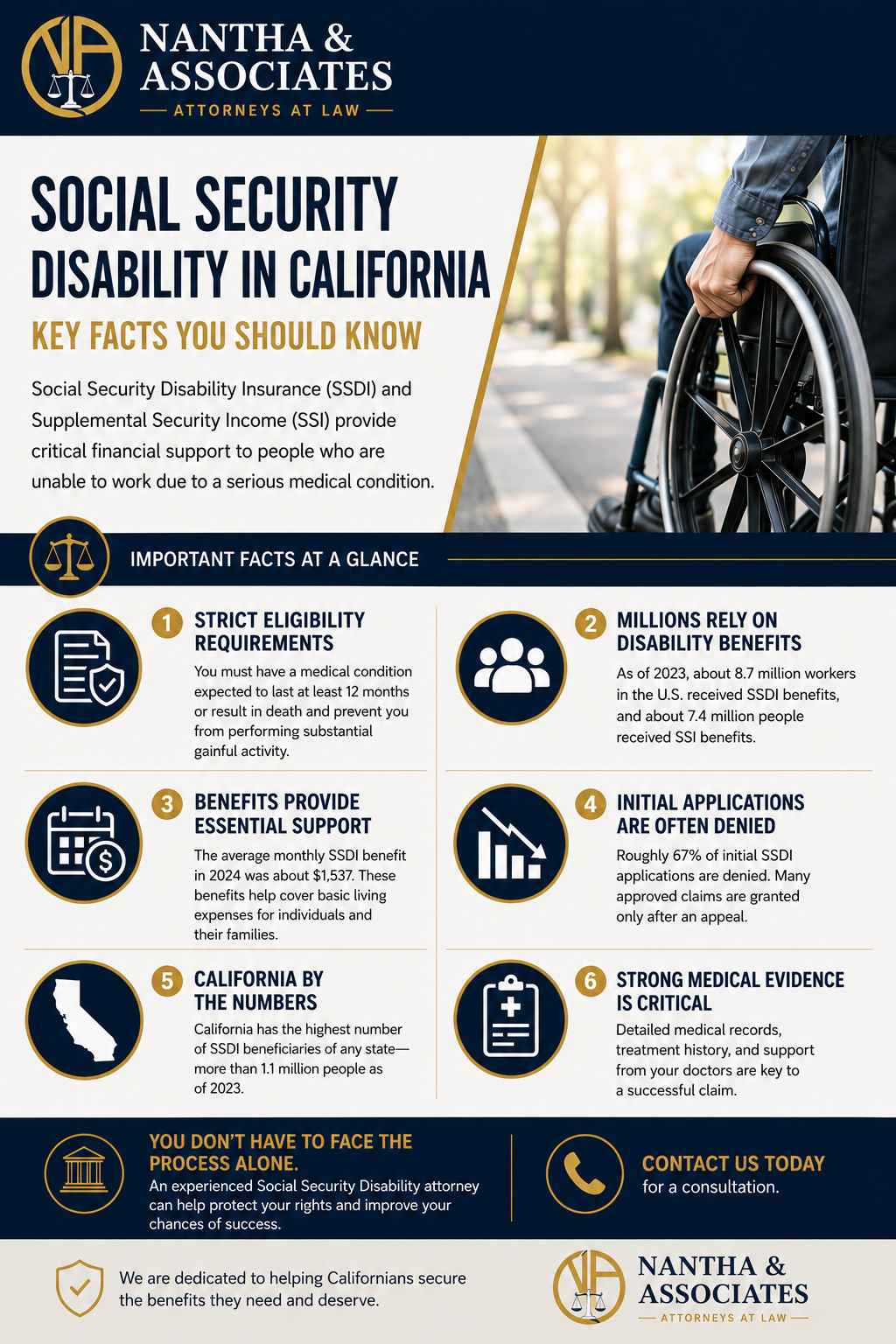
SSD Attorney Infographic

To get SSI, you must live in the United States or the Northern Mariana Islands and be a U.S. citizen or national.
In some cases, noncitizen residents can qualify for SSI. For more information, ask for Supplemental Security Income (SSI) For Noncitizens.

  • If you are eligible for Social Security or other benefits, you should apply for them. You can get SSI and other benefits if you are eligible for both.
  • If you live in certain types of institutions, you may get SSI.
  • If you live in a city or county rest home, halfway house or other public institution, you usually cannot get SSI. But there are some exceptions.
  • If you live in a publicly operated community residence that serves no more than 16 people, you may get SSI.
  • If you live in a public institution mainly to attend approved educational or job training to help you get a job, you may get SSI.
  • If you live in a public emergency shelter for the homeless, you may get SSI.
  • If you live in a public or private institution and Medicaid is paying more than half the cost of your care, you may get a small SSI benefit.

(referenced: Social Security Administration: Understanding SSI)

Frequently Asked Questions

Find answers to common questions about Social Security Disability benefits in California. Contact our team if you don’t see your question here.

Yes, but earnings can affect eligibility depending on whether the claim involves SSDI, SSI, or both. In 2026, Social Security’s substantial gainful activity amount is $1,690 per month for non-blind individuals and $2,830 per month for statutorily blind individuals. The blind SGA amount applies to SSDI, not SSI. Work incentives can also affect how earnings are treated after benefits begin. Earnings above the applicable level can create problems for a disability claim because Social Security may decide the person is performing substantial gainful activity. SSI also has income rules, so even lower earnings may reduce the monthly payment. A California Social Security Disability attorney can help review work history, pay records, and medical limitations before an applicant assumes they are disqualified.
The timeline varies depending on the complexity of your claim, the completeness of your medical evidence, and whether your application is approved at the initial stage or proceeds through the appeals process. While some claims are decided within a few months, others may take significantly longer if additional medical records or hearings are required. Providing complete documentation early in the process may help reduce unnecessary delays.
Yes. The Social Security Administration considers several vocational factors when evaluating disability claims, including your age, education, work experience, and ability to adjust to other types of work. In some situations, older applicants may qualify under different vocational guidelines if their medical condition prevents them from returning to their previous occupation.
Although both programs provide benefits to individuals with disabilities, they have different eligibility requirements. Social Security Disability Insurance (SSDI) is generally available to individuals who have worked and earned sufficient work credits through payroll taxes. Supplemental Security Income (SSI) is a needs-based program that considers an applicant's income and financial resources. Some individuals may qualify for both programs depending on their circumstances.
Medical records are central to an SSDI claim because Social Security needs evidence showing the severity, duration, and functional impact of a disabling condition. For claimants in California, including Santa Ana, Los Angeles, and San Diego, the strongest records often include treatment history, diagnostic testing, specialist notes, medication side effects, therapy records, and restrictions from treating providers. We focus on how those records explain real-world limitations, such as difficulty standing, walking, lifting, sitting, remembering instructions, or maintaining a regular schedule. A social security disability claim is often stronger when the medical evidence is consistent, current, and connected to work-related limitations.
You may be able to apply for SSDI if you worked long enough to earn the required credits and your medical condition prevents you from sustaining substantial work. In Santa Ana, Los Angeles, San Diego, and throughout California, many people delay seeking help because they can still perform some daily activities, but Social Security focuses on whether you can maintain competitive work on a consistent basis. We help evaluate how symptoms, treatment schedules, flare-ups, pain, fatigue, mental health limitations, or medication side effects affect employability. A well-developed social security disability claim should explain not only why work is difficult, but why full-time work is no longer realistic.
Speaking with an attorney before filing or appealing a social security disability claim can help identify missing evidence, deadline issues, and weaknesses in the way the claim is being presented. In California cities such as Santa Ana, Los Angeles, and San Diego, many SSDI claims involve complicated medical histories, prior workers’ compensation issues, or overlapping state disability benefits. We can review the facts, explain what Social Security may focus on, and help prepare a more complete claim or appeal strategy. To discuss your situation with our team, speak with our team about your disability claim.

Additional Information in California

How To Apply For Social Security Disability Benefits: Explains when to apply for Social Security Disability benefits, how SSDI waiting periods work, and what options are available for applying online, by phone, or with help from Social Security. This resource is useful for disabled workers in Santa Ana, Los Angeles, San Diego, and across California who need a reliable overview of the federal application process before preparing an SSDI claim.
Am I Eligible for Disability Insurance Benefits?: Reviews eligibility requirements for California State Disability Insurance, including when a person may qualify for short-term wage replacement due to illness, injury, surgery, pregnancy, or childbirth. This is helpful for California workers who are comparing state disability benefits with longer-term Social Security Disability or SSDI options.
Disability Rights California - SSDI Work Incentives: Explains work incentives available to people receiving SSDI and related Title II disability benefits. This page is valuable for California beneficiaries who want to understand how returning to work, trial work periods, and earnings may affect ongoing disability benefits.
CONTACT NANTHA & ASSOCIATES

Get the Legal Help You Need

We’re here to answer your questions and help you move forward. Reach out today for a free, confidential consultation.

Our Locations

PROUDLY SERVING CALIFORNIA

Los Angeles


Orange County

2000 E 4th St #110
Santa Ana, CA 92705

Inland Empire

San Diego


Call Us

(714) 866-0412Mon – Sunday: 6AM – 10PM PST

Email Us

nantha.associateslaw@gmail.cominformation@nanthalaw.comWe respond within 24 hours

Business Hours

Everyday: 6AM – 10PMWe are not closed on Sunday

Send Us a Message

FILL OUT THE FORM BELOW AND WE’LL BE IN TOUCH SOON.
  • Format: (000) 000-0000.
  • Should be Empty:
Your information is confidential.
FREE CONSULTATIONS
No obligation
CONFIDENTIAL
Your privacy is our priority
EXPERIENCED TEAM
Here to help
MULTIPLE LOCATIONS
Serving all of California
NANTHA LAW FOOTER LOGO
TRUSTED. EXPERIENCED. ON YOUR SIDE.
Google Reviews
★★★★★
Google Reviews
CLIENTS TRUST US
Lawzana Top Law Firm
RECOGNIZED FOR EXCELLENCE

MENU

HomePractice AreasOur AttorneysWhy Choose UsTestimonialsContact UsBlog

OUR LOCATIONS

LOS ANGELES

ORANGE COUNTY

2000 E 4th Street
Suite #110
Santa Ana, CA 92705

INLAND EMPIRE

SAN DIEGO

CONTACT US

(714) 866-0412
nantha.associateslaw@gmail.cominformation@nanthalaw.com
GET IN TOUCH
SCHEDULE A CONSULTATION TODAY
Legal Disclaimer:
"Making a false or fraudulent workers' compensation claim is a felony subject to up to 5 years in prison or a fine of up to $50,000 or double the value of the fraud, whichever is greater, or by both imprisonment and fine."
© 2026 Nantha & associates All Rights Reserved.
Powered By:
EWR logo
th-largecheckclosechevron-downgavelchevron-down